Siding does more than make your home look good.
In Minnesota, it protects your house from snow, ice, wind, hail, moisture, and extreme temperature swings. When siding starts to fail, it can lead to much bigger (and more expensive) problems.
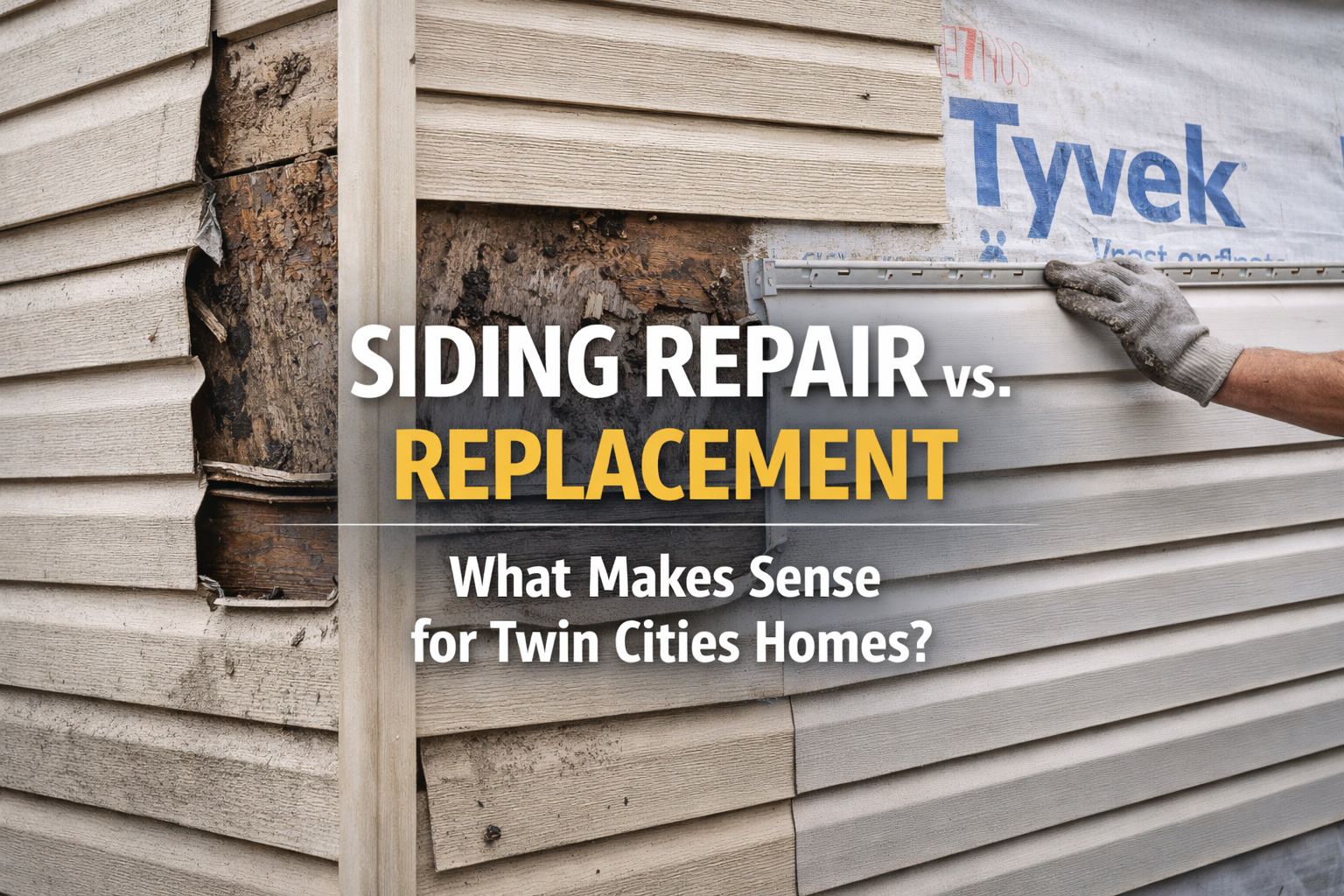
If you’re wondering whether you should repair your siding or fully replace it, here’s how Twin Cities homeowners can make the right call.
What Siding Is Supposed to Do
Your siding acts as a protective barrier that:
-
Keeps water out
-
Protects structural framing
-
Improves energy efficiency
-
Enhances curb appeal
-
Shields your home from wind and storms
When it’s working properly, you don’t think about it. When it’s not, issues can escalate quickly — especially in Minneapolis where freeze–thaw cycles are common.
When Siding Repair Makes Sense
Repair may be the right option if:
1. Damage Is Isolated
If only a few panels are cracked, loose, or storm-damaged, targeted replacement can often solve the issue.
Common repair situations include:
-
Hail impact in one area
-
Wind pulling off a few sections
-
Minor moisture damage
2. The Siding Is Relatively New
If your siding is under 10–15 years old and in generally good condition, repair is usually more cost-effective than replacement.
3. The Color and Material Can Be Matched
If matching panels are still available, repair can blend seamlessly. However, discontinued colors or faded siding can make spot repairs obvious.
When Replacement Is the Smarter Investment
Sometimes repair only delays a bigger issue.
Replacement may make more sense if:
1. Widespread Warping or Buckling
Minnesota’s temperature swings can cause siding to expand and contract. Over time, this leads to:
-
Warping
-
Buckling
-
Gaps between panels
If large sections are affected, replacing the entire system may be more practical.
2. Rot or Water Intrusion
For homes with wood siding — or improperly installed systems — moisture can get behind panels and cause structural damage.
Warning signs include:
-
Soft spots
-
Mold or mildew
-
Interior moisture issues
-
Peeling paint near seams
Once water intrusion spreads, full replacement allows proper inspection and correction of the underlying problem.
3. High Energy Bills
Older siding systems often lack modern insulation backing. Upgrading siding can improve energy efficiency — which matters during both Minnesota winters and humid summers.
4. Your Siding Is 20+ Years Old
Most siding systems have a lifespan of 20–40 years depending on material.
If your siding is nearing the end of its lifespan and showing wear, replacement may:
-
Prevent future repair costs
-
Improve curb appeal
-
Increase home value
-
Offer better storm resistance
What About Storm Damage?
The Twin Cities area regularly experiences hail and windstorms.
If your neighbors are replacing siding after a storm, it’s worth having your home inspected — even if damage isn’t obvious from the ground.
Insurance claims are time-sensitive, and early evaluation helps you understand your options.
Choosing the Right Material for Minnesota
When replacing siding in Minneapolis and surrounding suburbs, homeowners often consider:
-
Vinyl (low maintenance, cost-effective)
-
Fiber cement (durable, storm-resistant)
-
Engineered wood
-
Steel or metal options
Each material performs differently in Minnesota’s climate, so choosing the right one matters.
Repair or Replace? Start With an Inspection
The right decision depends on:
-
Age of the siding
-
Extent of damage
-
Budget
-
Long-term plans for the home
A professional inspection gives you clarity without guessing.
Whether you’re in Minneapolis, Maple Grove, Plymouth, Edina, Minnetonka, or surrounding metro communities, understanding the condition of your siding protects your investment and your home.
If you have questions about storm damage, aging siding, or possible replacement, scheduling an evaluation is the first step toward a clear plan.